
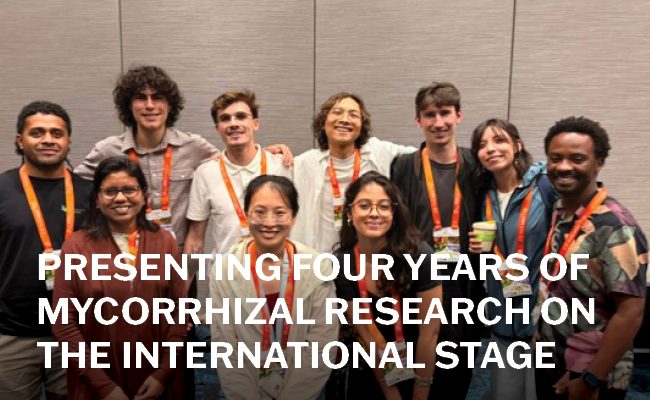
 I recently presented my PhD research at the International Conference on Mycorrhiza (ICOM) in Cairns. My presentation focused on genetic variation in mycorrhiza-related genes across different sorghum racial groups. ICOM brought together researchers working across a diverse range of areas in mycorrhizal research from different countries. The conference included sessions covering different aspects of mycorrhizal biology, which provided a valuable opportunity to learn about current research, methods and developments across the field, as well as exchange ideas and make new connections within the international mycorrhiza community.
I am conducting my PhD research in the Foo Research Group at the University of Tasmania. Our work has revealed considerable genetic variation in mycorrhiza-related plant genes across sorghum diversity. My research explores genetic variation in sorghum genes involved in arbuscular mycorrhizal (AM) symbiosis. AM fungi form beneficial associations with plant roots and can improve plant access to nutrients, particularly under nutrient-limited conditions. However, we still know relatively little about how the diversification and domestication of sorghum may have shaped the plant genes involved in this symbiosis.
Using genetic data from approximately 1,000 diverse sorghum varieties, we are investigating natural variation in genes that help plants form beneficial relationships with soil fungi called arbuscular mycorrhizal fungi. These fungi can improve a plant’s access to nutrients and support its growth. We are studying approximately 20 groups of genes involved in important processes such as nutrient uptake, communication between the plant and fungus, formation of specialised root structures, regulation of gene activity, hormone signalling and transfer of nutrients and fats. We examine small differences at individual positions in the plants’ DNA, known as single nucleotide polymorphisms or SNPs. These can be thought of as single-letter differences in the genetic code. By comparing these differences and the combinations in which they occur, we aim to identify genetic variants that may influence how effectively different sorghum varieties form and benefit from this fungal partnership.
In the Foo research group, we are now working towards connecting this genetic variation with mycorrhizal phenotypes to better understand why different sorghum genotypes may vary in their interactions with AM fungi. Ultimately, this could help identify beneficial plant–microbe interactions that may contribute to more sustainable crop production.
Now in the fourth and final year of my PhD, I am focusing on completing the glasshouse phenotyping and data analysis needed to link genetic variation with differences in root colonisation and plant growth. The next steps are to integrate these findings, prepare manuscripts and bring the different components of the project together in my thesis, which I expect to submit in April 2027. Presenting this work at ICOM was a valuable opportunity to receive feedback from the international mycorrhiza community and consider how the research can contribute to the development of crops that make better use of beneficial soil fungi.
Shamsunnahar Mukta
PhD Student, University of Tasmania


