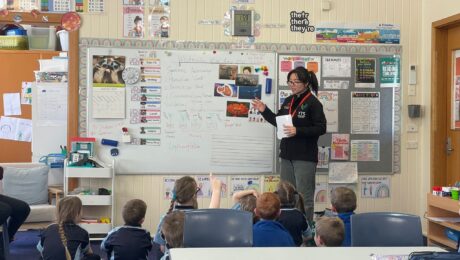
While science outreach can be simply about the joy of giving back to the community, it can also be used to support and accelerate your research career. Universities and research centres are starting to prioritise scientific outreach, and considering the unfortunate escalation in public mistrust in science and scientists, this is a wonderful thing. If you ever get frustrated by
The Best Practice Guidelines for the Collection and Transfer of Genetic Resources are a comprehensive framework designed to guide ethical and scientifically sound practices in the management of genetic resources. Australian law in relation to the collection, transfer, and use of genetic resources is fragmented and incomplete. This creates problems for researchers, access providers, and Indigenous Australians. The Guidelines help
The laboratory strain of Nicotiana benthamiana, a native Australian plant, has been extensively used for the last two decades in plant research around the world. It has an almost unique ability to rapidly express foreign genes in its leaves after simple injection of a bacterium, carrying the foreign DNA. The Waterhouse group has been pioneering an understanding of the species’
Last week was our 2025 Research Retreat, where there was once again a high calibre of posters and presentations from Centre members. This year, we were thrilled to be joined by many invited speakers, including Alison Bentley, Renee Lafitte and Belinda Medlyn, who delivered engaging plenary talks. We were also joined by Tia Squire from Untapped who delivered a fantastic workshop on communication across neurotypes that sparked
The ARC Centre of Excellence for Plant Success in Nature and Agriculture is pleased to share with you our 2024 Annual Report. Find out more about our Centre, research, community, and performance. Read more
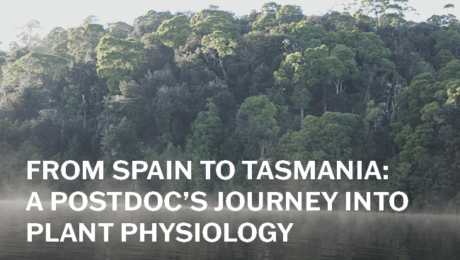
The past three years as a postdoc in the Brodribb Lab at the University of Tasmania (UTAS) have been a transformative chapter. After completing my studies in Spain—from undergrad through to PhD—I was lucky to receive a mobility grant from the Spanish government, which launched me into a new adventure overseas. Not only did I relocate geographically, but I also
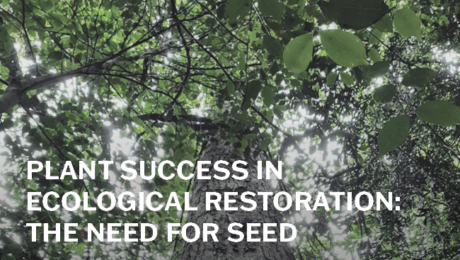
More than 52 million hectares of Australian land—an area equivalent to eight times the size of Tasmania—is degraded, with severe implications for biodiversity, ecosystem services, and human well-being. In 2022, Australia committed to the Global Biodiversity Framework (GBF), pledging to restore 30% of this degraded land by 2030, which equates to roughly 15.6 million hectares. Achieving this ambitious goal requires
Welcome to the 41st issue of the Plant Success newsletter! We’re conducting a short anonymous survey to gather feedback – whether you read every issue or just occasionally, we’d love to hear from you. This is your chance to tell us what you enjoy, what you’d like to see more of, and how we can make the newsletter even better
Author: Professor Tim Brodribb, the University of Tasmania. Plant behaviour may seem rather boring compared with the frenetic excesses of animals. Yet the lives of our vegetable friends, who tirelessly feed the entire biosphere (including us), are full of exciting action. It just requires a little more effort to appreciate. One such behaviour is the dynamic opening and closing of
PhD Students Caitlin Dudley, Kritika Sharma, Abhishek Soni and Chamilka Ratnayake ran an exhibit called Plant Detectives at the World Science Festival Brisbane on 22 and 23 March, 2025. Approximately 1,900 people visited the Queensland Museum Dinosaur Garden where the Plant Success display was. The exhibit gave attendees the opportunity to discover how plants have evolved with unique adaptions and
TOP