

Plant Success and the Training Centre for Predictive Breeding hosted a week of soybean collaborative project meetings in Brisbane earlier this month, bringing together teams from BASF, Iowa State University (ISU), and QAAFI. A central objective of this collaboration is to tackle Genotype x Environment x Management (GxExM) interactions in soybean – a complex challenge that demands coordinated expertise across modelling, physiology, genomics, and breeding. The meetings created space to unite these disciplines, spanning dissection of key genes, crop model development, drone-based phenotyping and application across BASF soybean breeding programs in the US.
Attendees included Partner Investigator Colin Cavanagh from BASF, whose strategic leadership has been instrumental in shaping and advancing the collaboration. BASF soybean breeders and digital phenotyping experts joined for targeted sessions, contributing operational insights and responding to detailed technical questions that grounded our discussions. From ISU, Partner Investigator Sotirios Archontoulis, Brenda Gambin, and Isaiah Huber – who made a welcome escape from the Iowa winter – brought deep expertise in soybean crop growth model development. From QAAFI, Mark Cooper, Graeme Hammer, Greg McLean, Shunichiro Tomura, Alfredo Caldera, and I contributed expertise spanning crop modelling, predictive breeding pipelines, and quantitative genetics, ensuring modelling outputs and genomic predictions remain tightly aligned with breeding objectives.
PhD students Shunichiro and Alfredo gained direct exposure to the process of integrating predictive breeding tools within a large industry program. Through engagement with BASF and ISU, they observed how multidisciplinary teams align biological insight, modelling outputs, and operational constraints to support breeding decisions – experience that complements their research training and helps prepare the next generation of interdisciplinary plant scientists.
A key part of the UQ team’s contribution has been the development of EasiGP – Ensemble AnalySis with Interpretable Genomic Prediction – a computational framework built by Shunichiro as part of his PhD. EasiGP integrates multiple genomic prediction models, including both traditional statistical approaches and machine learning methods, into an ensemble. Beyond improving predictive performance, the framework enables interrogation of model behaviour and visualisation of the genetic architecture underlying key traits, providing biological interpretability.
A highlight of the week was integrating improvements from the ISU phenology soybean model into our prediction pipelines to begin analysing BASF’s large breeding dataset – what Graeme refers to as “getting to the exciting pointy end” of the project. Reaching this milestone reflects sustained contributions from all groups. BASF has led extensive data generation across environments; ISU has strengthened the mechanistic foundations of the soybean model by refining temperature and photoperiod response functions through controlled chamber experiments; and the UQ team has developed and extended predictive breeding pipelines, including EasiGP, for soybean application. Bringing these components together represents a significant step forward – translating years of model development and genomic prediction research into tools to contribute to selection decisions across diverse soybean environments.
Special thanks to members of the Plant Success CORMS team Susie Green, Phoebe Baldwin, and David Tomlins for their support throughout the week, and to Centre Director Christine Beveridge and Training Centre Director Lee Hickey for their ongoing commitment, which makes collaborations like this possible.
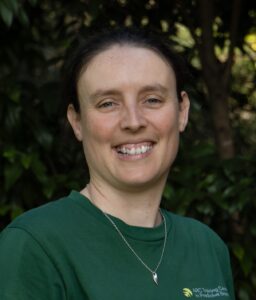
Melanie Wilkinson
Research Fellow, The University of Queensland


