
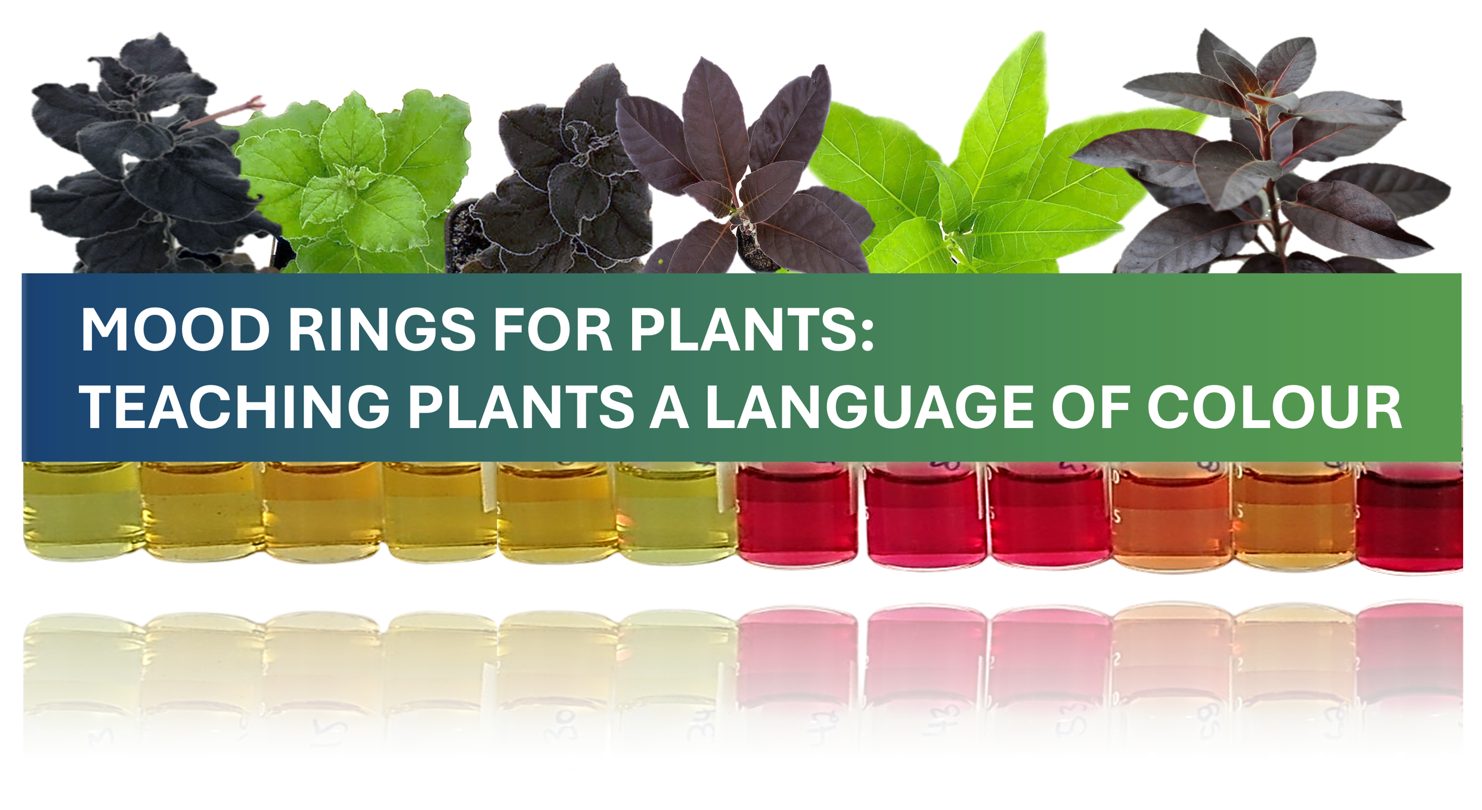
 When I began my PhD, I was fascinated by a deceptively simple question: how do plants turn genes into colours? Walk through any garden and you’ll see the answer shimmering in red petals, purple leaves, or even blue flowers – colours born from anthocyanins. These pigments don’t just decorate plants; they act as antioxidants, sunscreens, and ecological messengers, protecting tissues, luring pollinators, and sometimes warning off herbivores.
For me, anthocyanins became more than pigments, they became a window into the wider metabolic orchestra of the plant. My research asks how we might re-score that music through metabolic engineering. At its core, metabolic engineering is about intentionally reprogramming a plant’s cellular networks – its metabolism, gene regulation, and signalling systems – to generate new and beneficial traits. This approach holds immense promise for agriculture, medicine, and biotechnology.
I work mainly with Nicotiana benthamiana, and secondarily with Nicotiana tabacum. Both belong to the Solanaceae family and are already workhorses in biotechnology, making them excellent models to test how we might “mix and match” biochemical pathways using tools like CRISPR. Many important crops – citrus, wheat, potato, cotton, and sugarcane – are polyploids too, so insights from these models can ripple across agriculture. My aim is to interlink metabolic pathways and generate proof-of-concept phenotypes that reveal how regulatory networks function.
One of the most exciting byproducts of this metabolic engineering work has been the development of an anthocyanin reporter system. Most current plant reporter systems rely on exogenous markers such as GFP (green fluorescent protein), GUS (β-glucuronidase), or luciferase – tools borrowed from jellyfish, bacteria, or fireflies. These are powerful in the lab, but they often require destructive sampling, specialised equipment, or aren’t practical for use in the field. By contrast, anthocyanins are endogenous to most plants, offering a natural, non-transgenic way to monitor pathway regulation in real time. This anthocyanin reporter would turn the invisible on–off switches of plant pathways into colours you can actually see.
By engineering plants to produce different shades of anthocyanins, I can “colour-code” pathway activity. It’s like giving plants their own built-in mood ring, where the colours reveal shifts in their internal state – just as a mood ring reflects changes in our body temperature. In the future, this could mean that a farmer walking through a field might literally see colour shifts that signal when plants are stressed, when a pathway is switched on, or whenever a crop needs attention. Instead of waiting for hidden problems to show up as reduced yield weeks later, the farmer could act right away, guided by the colours the plants themselves display. And who knows, perhaps one day these subtle colour changes could be monitored by drones flying high above the fields, and instantly informing farmers through hi-tech digital systems.
The cytochrome P450 enzymes F3′H and F3′5′H, for example, determine whether plants produce cyanidin (red) or delphinidin (blue), depending on which hydroxylation reactions they catalyse. By tweaking the expression of these enzymes, I am making the plant paint itself in new colours – a direct, visible readout of genetic and metabolic changes.
Beyond discovery, metabolic engineering of the anthocyanin pathway holds practical promise – from developing stress-tolerant crops, to biopharming natural pigments, to biofortifying foods with health-promoting compounds.
In essence, I’m using colour as both a language and a tool, teaching plants to signal when their pathways are active and learning from those signals how to design the next generation of crops, far beyond colour as a mere pigment.
Chamilka Ratnayake
PhD Student, Queensland University of Technology
Supervisors: Prof. Peter Waterhouse, Dr Julia Bally and Dr Satomi Hayashi.


